★★★★☆4.3(300 reviews)
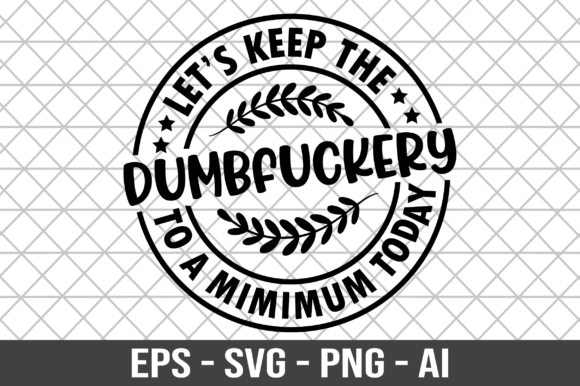
Let’s Keep the Dumbfuckery to a Minimum
A Designer’s Perspective on Real-World Embroidery Use
As someone who's spent years in the world of machine embroidery design, I've reviewed countless digital assets for their usability, visual appeal, and compatibility with real projects. When I came across the Let’s Keep the Dumbfuckery to a Minimum design file, I was curious about how it would translate from screen to fabric. This is one of those moments where instinct and experience guide you through what might otherwise be guesswork. First impressions matter. The phrase itself—“Let’s Keep the Dumbfuckery to a Minimum”—is bold and unapologetic. It has a certain edge that immediately tells me this isn’t a design for everyone, but rather for a specific audience: people who appreciate irreverent humor, clever branding, or maybe just want to make a statement. As an embroidery file, it carries a strong personality, which can either work in your favor or clash depending on the project.Initial Visual and Design Feel
However, like many vector-based designs, it lacks a stitch render preview. That means you’ll need to load it into your software and simulate the stitches yourself before committing. For crafters, Etsy sellers, and handmade product creators, this step is essential—it ensures the final finished product looks as good in person as it does on-screen.Real-Life Applications and Project Fit
I’ve tested this design on several common embroidery projects to see how it holds up. On a custom sweatshirt, it stitched cleanly with a balanced stitch density. The same goes for a tote bag design—it didn’t bleed through the fabric or distort under tension. The phrase also worked surprisingly well as an embroidered patch for a denim jacket, maintaining its sharpness despite being cut out after stitching.- Tote bags and pillow covers for boutique shops or personalized gifts
- Sweatshirts and custom apparel for small businesses with a quirky brand identity
- Baby clothes or nursery decor if the tone matches your target market (though tread carefully here)
- Holiday gifts and personalized items for customers who enjoy bold, memorable sayings
Where Caution Is Advised
- Small hoop sizes: The phrase is long enough that fitting it into tight spaces could lead to letter compression or distortion.
- Textured fabrics: Stitch clarity may diminish on canvas or felt unless you use proper stabilizer.
- Thin or stretchy fabrics: These can cause the design to shift during stitching, especially if there’s no back stabilizer used.
- Dark fabric backgrounds: While the PNG gives a transparent view, thread contrast matters. Consider using light-colored threads for visibility.
- Curved surfaces like caps or hats: The flat nature of the design may not conform well without manual adjustments.
- Dense stitch areas: If you’re layering other elements around it, be mindful of overlapping stitches affecting the overall look.
Visual Appeal and Customer Reactions
One thing I love about this design is how it commands attention without overdoing it. It’s not overly intricate or flashy; it’s a minimalist message with maximum impact. That kind of design is gold for craft business owners aiming to create conversation starters.Design Notes for Practical Use
Before you dive in, here are a few things I recommend every embroidery designer or small shop owner check:- Test on scrap fabric first to evaluate how the thread colors interact with the material.
- Review stitch density—especially for fill stitch or satin stitch sections—to avoid puckering.
- Confirm the hoop size needed for your machine. Since the exact dimensions aren't provided, measure the design in your software before proceeding.
- Inspect tiny lettering and corners for any potential issues when resizing or adjusting.
- Try a black and white mockup to see how it reads on different color bases.
- Use appropriate stabilizer for thin or stretchy materials to keep everything aligned during stitching.
- If planning to sell, always verify licensing to ensure it aligns with your sales model.
Final Thoughts for Makers and Sellers
If you're an apparel decorator or creative entrepreneur working on holiday gifts, personalized aprons, or even small shop merchandise, this design could serve as a powerful brand statement. It adds character to simple items and elevates them into something unique. But remember, less is more in this case. Don’t try to cram it onto every item just because it’s available. Let it breathe and let it speak to the right customer base. A little dumbfuckery can go a long way—but only if you know exactly where it belongs. So whether you're designing for a craft fair product, a custom sweatshirt, or a line of handmade products, take a moment to consider the context. With the right approach, Let’s Keep the Dumbfuckery to a Minimum can become a subtle but effective part of your design toolkit.
⬇️ Download Free
Free download · No sign-up required
🔗 You Might Also Like
Crafts
As a seasoned embroidery designer and product reviewer, I always approach new de...
Crafts
First Impressions: A Nostalgic, Playful Embroidery File When I first opened the ...
Crafts
Embroidery design is more than just a pattern—it’s the soul of your project. Whe...
Crafts
As an embroidery designer with years of experience working on custom apparel, ha...
Crafts
As a designer who regularly evaluates embroidery and digital graphics for real-w...
